The lake trail near my house is a little over four miles around. For years I walked it most mornings and never gave it a thought. Then my knees started filing complaints. First on the downhill side. Then on the stairs at home, which we have plenty of because our house is two stories. Then just getting up out of a chair. I am 61 and my doctor calls it mild to moderate osteoarthritis, worse on the right than the left, and his advice was not to quit walking.
So I kept walking shorter loops and I collected the things that let me keep doing it. A compression sleeve. Insoles for the concrete. Poles for the steep stretch down to the water. And about nine months ago, after I asked my doctor whether Voltaren Arthritis Pain Gel was fine alongside everything else I take, a 150 g tube that now lives in the bathroom medicine cabinet. What follows is how I actually use it before a walk, in the order I do it, including the parts I got wrong at the start. None of this is medical advice. Your knees are not my knees, and your doctor is the one who knows your medications.
The tube in my medicine cabinet, if you want to read the label yourself
Voltaren Arthritis Pain Gel is what I put on my right knee before morning walks, as the label directs. It is over the counter, it is diclofenac 1%, and it is not a cure. Read the whole label, and if you take anything else, say so to your doctor or pharmacist first.
Amazon Check Today's Price on Amazon →Step 1: Get the okay first, including the boring medication question
The first thing I did was not buy the gel. I had an appointment about something else and I tacked this onto the end of it: is a topical diclofenac gel fine for me, given the other things I take? The conversation took about four minutes and it is the reason I have never once felt uneasy using it. Diclofenac is an NSAID. Topical means less of it gets into your bloodstream than a pill, but less is not none. If you take a daily aspirin, a blood thinner, or another anti-inflammatory, that is exactly the kind of thing to say out loud before you start.
I also mentioned it to the physical therapist I saw for about eight weeks when this first flared up. She was far less interested in what I put on my knee than in whether I was keeping up with the exercises she gave me, which I was not, at first. That was its own lesson. She gave me a short set, quad sets and straight-leg raises and a wall sit I still do badly, and she explained that the muscle above the knee does a lot of the work of settling the joint down. Mine had gotten lazy. She also caught that I had started favoring the left leg and letting the right foot drag, which is exactly how the other knee ends up complaining too. Eight weeks of that was worth more than any ointment.
The last part of step one is reading the label. Not skimming it while the kettle boils. Actually reading it. It tells you who should not use the product, how much to apply, how often, and what to do if your skin reacts. I read it twice before the first walk and I still go back to it whenever I forget something.
Step 2: Apply it before you get dressed, not after
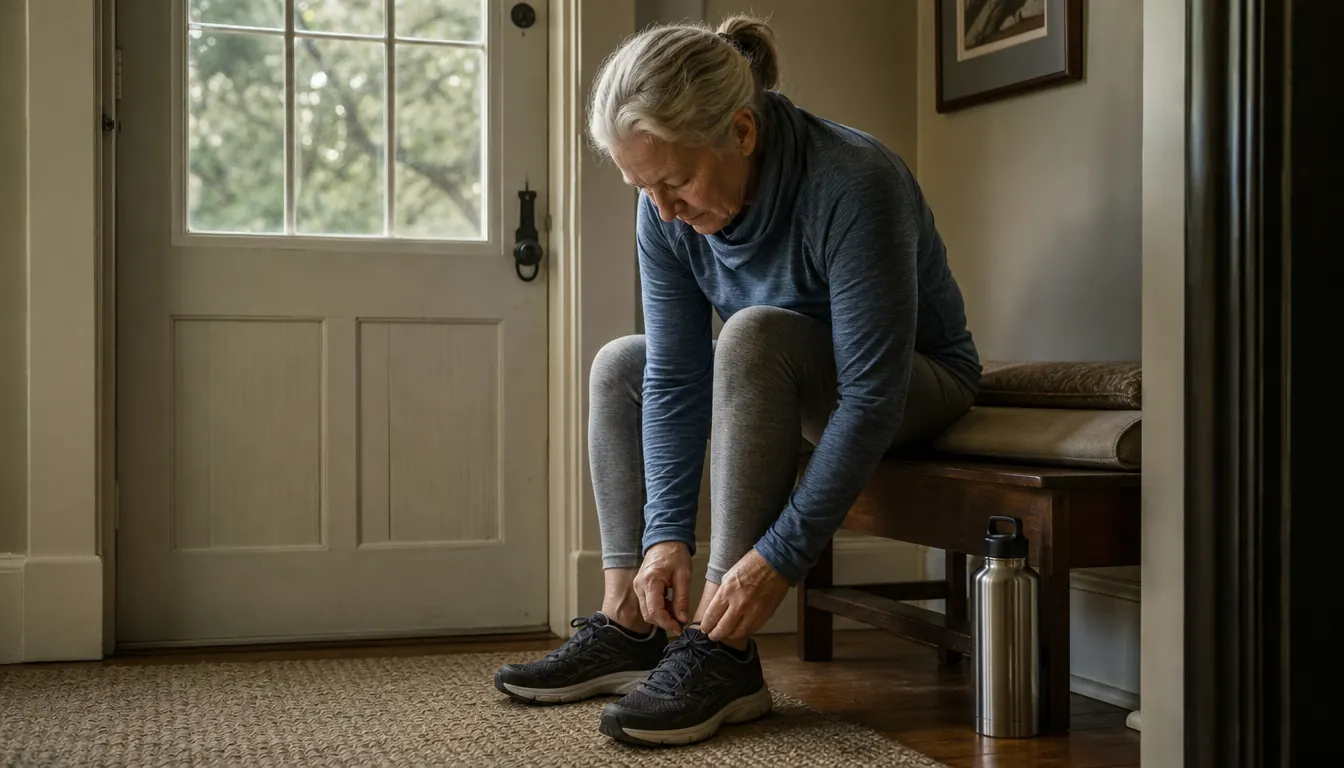
This was my mistake for most of the first month. I would put my shoes on, pull the sleeve up over my knee, head for the door, and only then remember the gel. Then I would either skip it entirely or smear it on in the hallway, which is not the same thing as doing it properly.
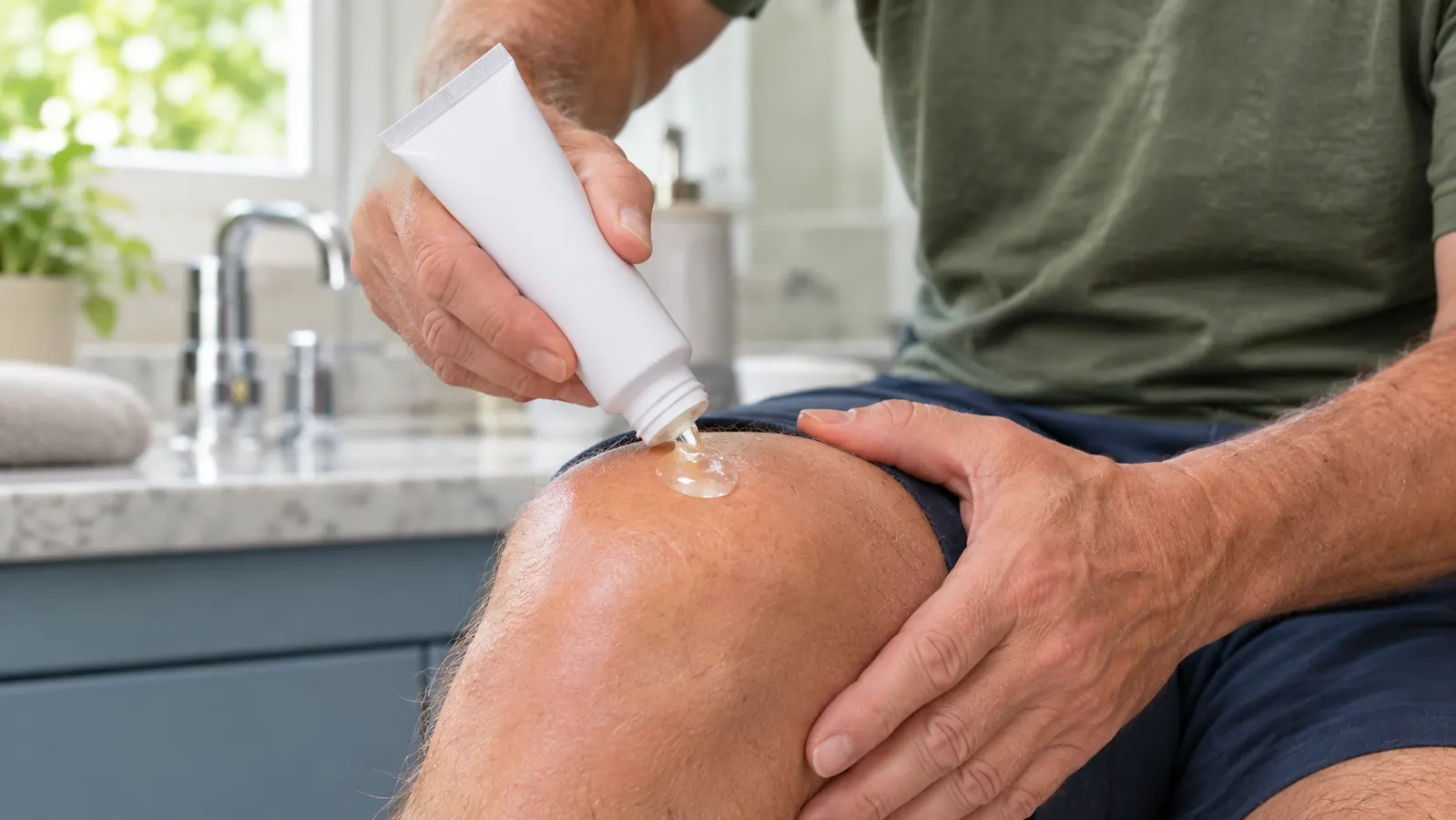
The order is fixed now. Gel first, then the sleeve, then the shoes, then the door. The tube has an easy flip cap, which sounds like a small thing until you are doing this one-handed with your other hand braced on the bathroom counter. I squeeze out what the label calls for, rub it into the right knee, and then I wait. Not long. Just long enough that the skin is not wet when the sleeve goes on. If I pull the sleeve over wet gel, it drags, and the gel ends up in the fabric instead of on my knee.
Ninety seconds is the number I settled on, measured once out of curiosity with the kitchen timer and never again. In practice I cap the tube, put it back in the medicine cabinet, and use those ninety seconds to fill a water bottle and find my keys, so the waiting never feels like waiting.
Then I wash my hands. Every time, not most times. The label says to and it is a good habit regardless, because you will rub your eye or butter a piece of toast ten minutes later without giving it a thought.
Step 3: Use the amount the label calls for and keep it in one place
The temptation with anything you rub on is that more must be better. It is not. Voltaren comes with its own amount and its own schedule printed on the packaging, and following those is the whole reason to buy something that has been studied instead of mixing your own concoction in the kitchen. I use it on the right knee, the worse one, and I do not top it up halfway through a walk or double the amount because the forecast turned cold. The tube is 150 g and one of them has carried me through about nine months of most-morning use, which surprised me.
I also stopped improvising around it. It goes on, it dries, and the sleeve goes over it as clothing, not as a wrap. Nothing else gets layered on top of it. And it lives in the bathroom medicine cabinet, not in my walking bag, because a tube that travels gets lost, and the whole point of keeping it in one place is that you never have to think about where it is at six in the morning.
One more thing I had backwards: I used to apply it after the walk, reasoning that the damage was already done. After is fine on the label's schedule, but before is why I started. The first half mile is the worst half mile for me. If anything is going to help at all, I want it working during the part that hurts.
The gel does not make the walk easy. It makes the first half mile stop being a negotiation, and that is all I ask of it.
Step 4: Build the rest of the walk around it
A gel by itself is not a walking plan. What gets me out the door is a stack of unglamorous things working together, and if I had to rank them by how much they matter to my right knee it would be the shoes first, the poles second, the sleeve third, and the gel fourth. That is not a knock on the gel. It is just honest about the size of the job.
The insoles went in after I noticed my knees complained more on the concrete sidewalk than on the softer lake trail. Same distance, different surface, different knees at the end of it. I trimmed a pair to my walking shoes along the guide line and I swap them out at about the six month mark when they flatten.
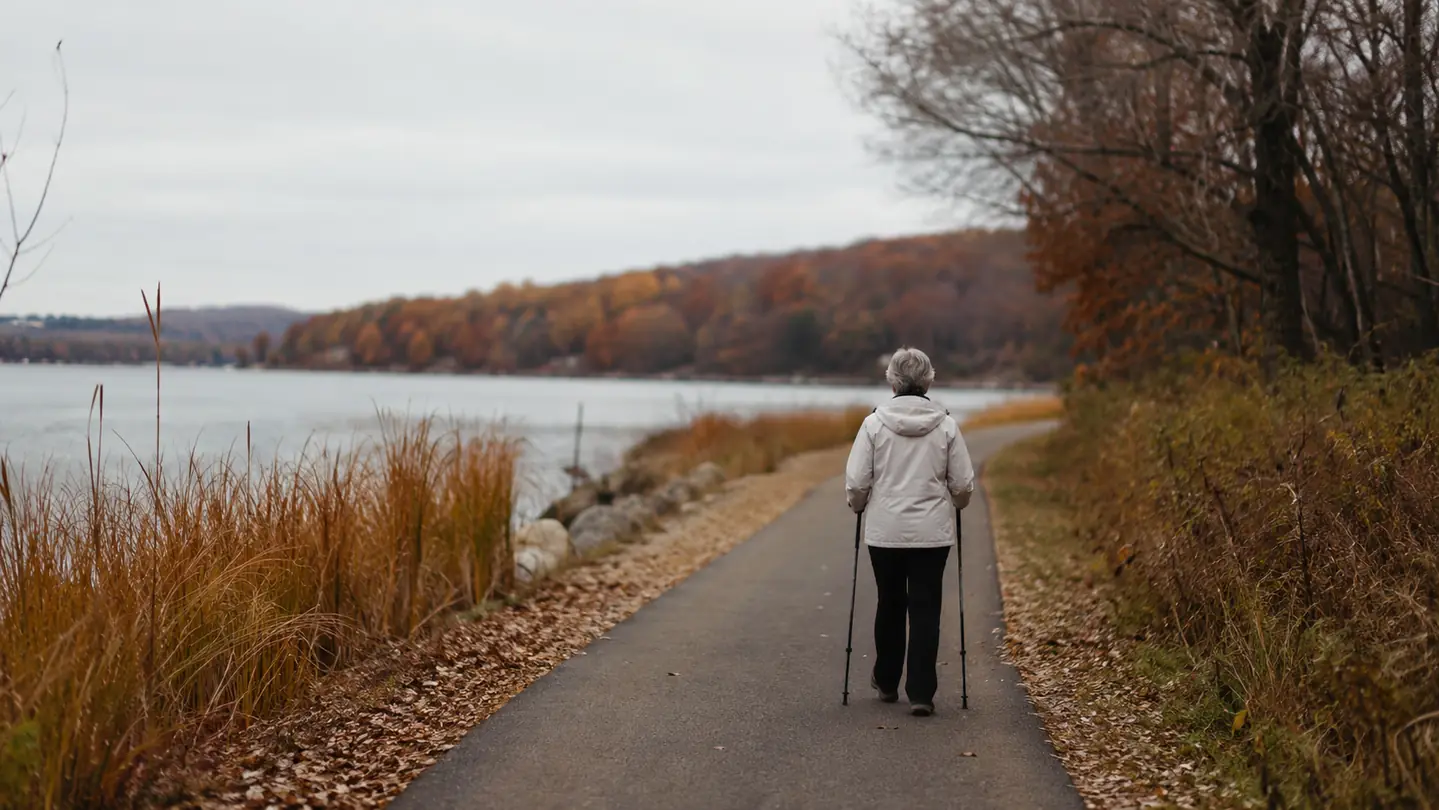
The sleeve goes on the right knee over dry gel. It is a pull-on compression sleeve, not a braced thing with straps, and it gives warmth and a snug feeling more than real support. On the downhill stretch I take both trekking poles, set a little shorter than I use them on flat ground. That single adjustment did more for my right knee than anything else I have tried, because it takes weight off the joint on the way down to the water. In winter I add the snow baskets and take the poles on the sidewalk too, because a patch of ice under a thin layer of snow is the one thing that will end a walk early and keep it ended for a week.
Step 5: Notice what changed and write it down
For the first couple of months I judged everything by feel, which is a poor way to judge anything, because some mornings are good and some are not and memory is not reliable. So I started writing one line in a notebook by the back door before I take my shoes off. Distance, weather, and a number from one to ten for how the knee felt at the end.
What the notebook showed me was not dramatic. It showed me the bad mornings lined up with two things: a long downhill the day before, and a cold snap. That was worth knowing. It got me using the warm pack before I go out on cold days, and it got me shortening the loop instead of gutting through it because I had decided in advance that I would.
It also caught something I would not have believed. My Monday walks were consistently the worst of the week, and Monday is the day I do the grocery run and carry the bags up the front steps. Nothing about that is mysterious once it is written down in your own handwriting. It is completely invisible if you are going by feel.
The notebook also tells you when to call the doctor, which is the real reason to keep notes at all. If the knee gets hot and swollen, or the pain changes character, or the skin where you applied the gel gets red and itchy, that is not a thing to work around on your own. Stop and ask.
The Mistakes I Made in the First Month
I expected too much, too fast. I had built the gel up in my head as the thing that would let me go back to four miles. It is not that. It took about three weeks of regular use before I could say anything definite about it, and what I could say was modest: the achy days were less achy. If you try it twice and decide it does nothing, you have not really tried it.
The other one was the sleeve over wet gel, which I did three mornings in a row before I worked out why the sleeve felt slippery and why the gel was gone by the halfway point. Small thing. Fixed by waiting ninety seconds.
What Else Helps
After a longer walk or a day of errands on my feet, I use a cold pack on the right knee for fifteen to twenty minutes, sitting in the kitchen with a thin cloth between the pack and my skin. The wrap I have holds three gel packs and fits up to a 21 inch knee, and the packs live in the kitchen freezer, which means I actually use them instead of meaning to. On cold mornings when the knee is stiff before I have even stood up properly, I warm one of those packs in warm water and use it before I go out. Cold after, warm before. That pattern took me a year to work out.
The other things are boring and they work. I do the physical therapist's exercises on the days I do not walk, which is not every day, if I am being honest. In winter I walk the mall or the treadmill in the basement instead of the trail. I keep the walks at two to three miles on a good day and I stopped treating that as a defeat. If you are weighing a topical gel against the herbal options, that comparison is worth reading before you buy anything, because they are not doing the same job.
And I keep the walking. Every version of this I have read says the same thing and my doctor said it plainly: the joint wants movement. Everything else, the sleeve and the insoles and the poles and the tube in the medicine cabinet, exists to make the movement possible.
Start with one morning and one line in a notebook
You do not need a new routine. You need the gel, the sleeve you already own, and a single sentence written down after the walk. Nine months in, that is still what it comes down to for me.
Amazon Check Today's Price on Amazon →