
My right knee decides how far I walk now. Most mornings I take the paved trail around the lake near our house in Bloomington, Minnesota, and most mornings the first quarter mile tells me what kind of day it will be. If the knee is stiff, I turn around early. If it loosens up, I get my two or three miles. I am 61, I was diagnosed with mild to moderate osteoarthritis in both knees about three years ago, the right worse than the left, and I have tried enough creams and gels to fill a bathroom shelf. Two of them are worth talking about: Voltaren Arthritis Pain Gel and arnica gel.
The short answer is that Voltaren is the one I keep in the bathroom medicine cabinet. It is a topical gel with diclofenac sodium 1%, an NSAID, and it is the only one of the two that I noticed making a difference on the days when my knee is achy before a walk. Arnica gel is gentler. It feels nice going on, and I know people who swear by it for bruises and sore muscles. For my knee, it was a pleasant rub and not much more. That is the whole comparison in two sentences, but the details matter if you are standing in the drugstore aisle trying to decide.
| Voltaren Arthritis Pain Gel | Arnica Gel | |
|---|---|---|
| Active ingredient | Diclofenac sodium 1%, a nonsteroidal anti-inflammatory drug | Arnica montana extract, an herbal ingredient |
| Evidence for arthritis pain | Label says clinically proven to relieve arthritis pain and improve mobility | Limited high-quality evidence for knee arthritis |
| Skin feel | Light gel that absorbs, can sting on broken skin | Cool and gentle, less likely to sting |
| Scent | Mild and fades | Herbal and noticeable |
| Best for bruises and everyday soreness | Not its main labeled use | Traditional go-to for bruises and sore muscles |
| Knee arthritis | Labeled for arthritis pain | Not a standard arthritis treatment |
| People who must avoid NSAIDs | Not an option | An alternative to discuss with a doctor |
| Time to notice | A few days of consistent use | Immediate cooling, no lasting change for me |
| Ease of use | Flip cap, thin gel, washes off hands | Similar |
| Doctor conversation | Needed, especially with blood thinners or kidney issues | Needed, especially with allergies or blood thinners |
How I Tried Both
I did not set up a science experiment. I did what most people do: I tried one, then the other, and paid attention. I started with arnica gel about two years ago, after a friend from the dental office where I used to work told me it was the only thing that helped her hands. I used it on my right knee for a couple of weeks, morning and after walks. It felt cool and pleasant. The knee still hurt on stairs. I stopped when the tube ran out.
To be fair to arnica, I gave it a real run. I bought a tube at the co-op in Bloomington in late February, back when the sidewalks were still icy and my knees were at their worst. I used it morning and after walks for about two and a half weeks. On a Saturday in March I did the short loop, a mile and a half, and by the time I reached the bench at the north end I sat down for five minutes before I walked back. That was the day I stopped expecting arnica to do a job it was not built for.
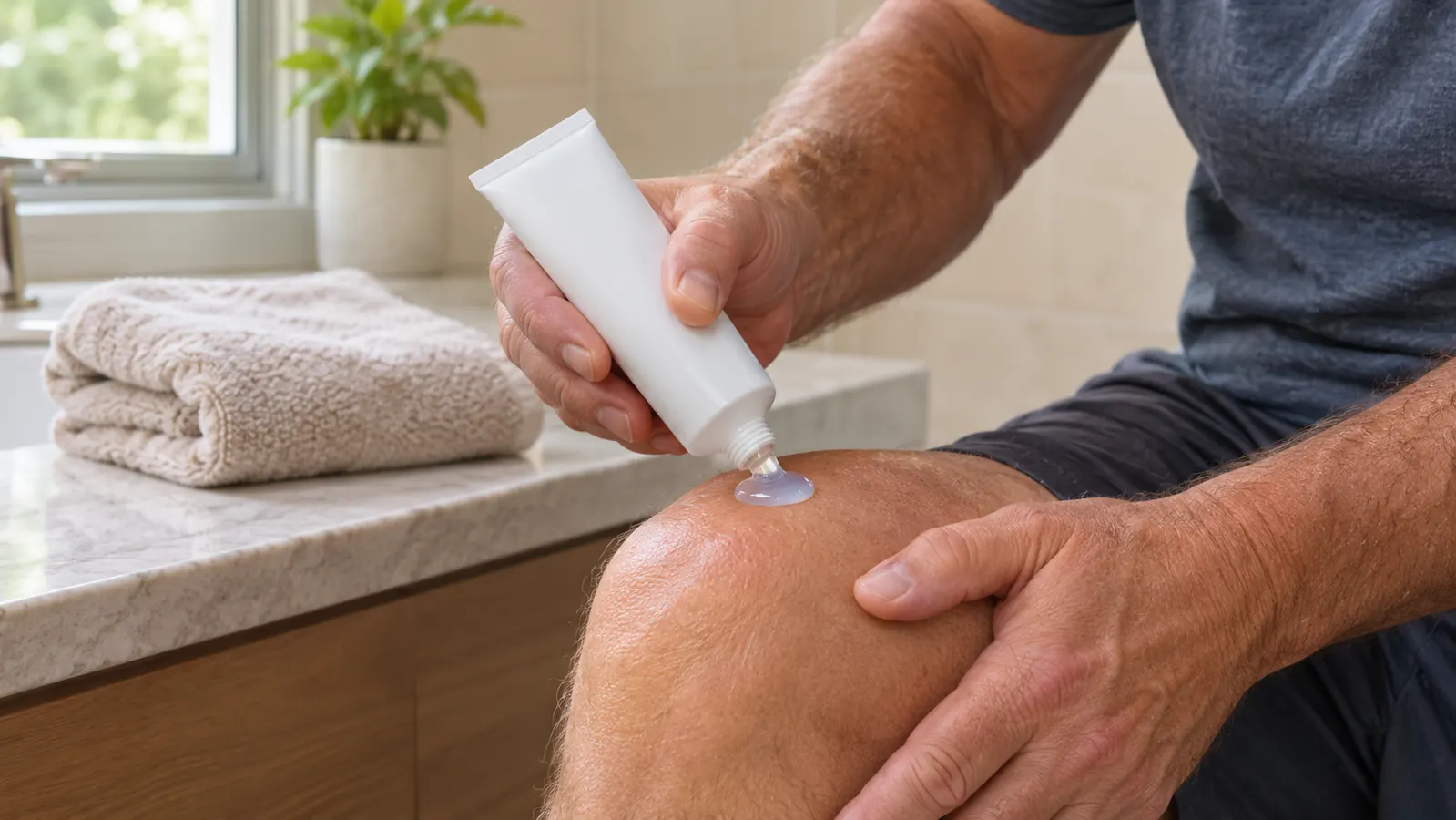
I started Voltaren about nine months ago, after asking my primary care doctor whether it was okay with my other medications. She said yes, use it as the label directs, and do not use more than that. I use it on the right knee, usually before my morning walk and sometimes again in the evening after a day with a lot of stairs. I wash my hands after. The tube is 150 g and it has lasted me a long time because I use a small amount.
The difference was not dramatic. I want to be clear about that. Voltaren did not make my knee feel 25 again. What it did was take the edge off enough that I stopped cutting walks short. On a bad morning, the first quarter mile is still stiff. But I am more likely to keep going. With arnica, I liked the ritual. With Voltaren, I got a result I could measure by the distance on my watch.
Where Voltaren Wins
Voltaren wins on the thing that matters most to me: it is the one with label language about arthritis. The tube says it is clinically proven to relieve arthritis pain and improve mobility, and it says Voltaren is the number one doctor recommended topical pain relief brand. I am not a doctor. I am a retired dental office manager with two bad knees and a shelf of things that did not work. That language is why I asked my doctor about it, and why I was willing to try it for more than a weekend.
I keep a small log in my phone, not because I am an organized person but because I wanted to know whether it was working or whether I was just having a good stretch. Over six weeks last spring I walked sixteen mornings out of twenty-one and averaged about two and a half miles. The six weeks before that, without the gel, I walked eleven mornings and averaged closer to two. That is not proof of anything. It was enough to keep me using it.
It also wins on staying power. The gel is thin, it absorbs, and I do not feel like I am wearing a layer of grease under my jeans. The flip cap is easy to open with one hand, which sounds like a small thing until your hands are stiff too. I keep the tube in the bathroom medicine cabinet. One tube has lasted me about nine months, using it as the label directs. Arnica was gone in a few weeks and I did not miss it.
Voltaren did not give me new knees. It gave me back the second mile.
Where Arnica Wins
Arnica wins on comfort. The gel I tried felt cool and light, and it did not sting, even on the days when my skin was dry from the Minnesota winter. Voltaren can sting if you have a cut or if your skin is sensitive. I learned to keep it away from any scratch. Arnica also wins if you like herbal smells. It smells like a garden, not a medicine cabinet.
Arnica wins for people who cannot or will not use NSAIDs. Diclofenac is an NSAID, even in a gel, and some people need to avoid it because of stomach issues, kidney issues, or blood thinners. Arnica is not an NSAID. That does not make it risk-free, and it does not make it effective for everyone. It just means it is a different category. If you are in that group, ask your doctor or pharmacist before you try either one. I did.
The gel that got me back to two miles
Voltaren Arthritis Pain Gel is the one I keep in the bathroom medicine cabinet. If your knees have been shortening your walks, it is worth asking your doctor about it.
Amazon Check Current Price on Amazon →What I Wish I Had Known
I wish I had known that a topical gel is not a substitute for the boring stuff. The gel helps me on achy days, but what has kept me walking is the physical therapist I saw for about eight weeks, the compression sleeve I wear on the right knee, and the habit of not doing too much on a good day. The gel is one part of a routine. If I had bought it expecting it to fix everything, I would have been disappointed and I would have blamed the product.
I wish I had known that arnica and Voltaren are not interchangeable. One is an herbal gel. One is an NSAID. They do different things. I spent a couple of weeks rubbing arnica on my knee and wondering why my stairs were still hard. That was not arnica's fault. I was asking it to do a job it was not built for.
I wish I had known to ask about interactions. I take other medications, and I did not think a gel could matter. It can. My doctor went through my list and told me it was fine for me. If you take blood thinners, have kidney problems, or have had stomach bleeding, do not skip that conversation. I am not telling you what to do. I am telling you what I did.
How I Use It on a Walking Day
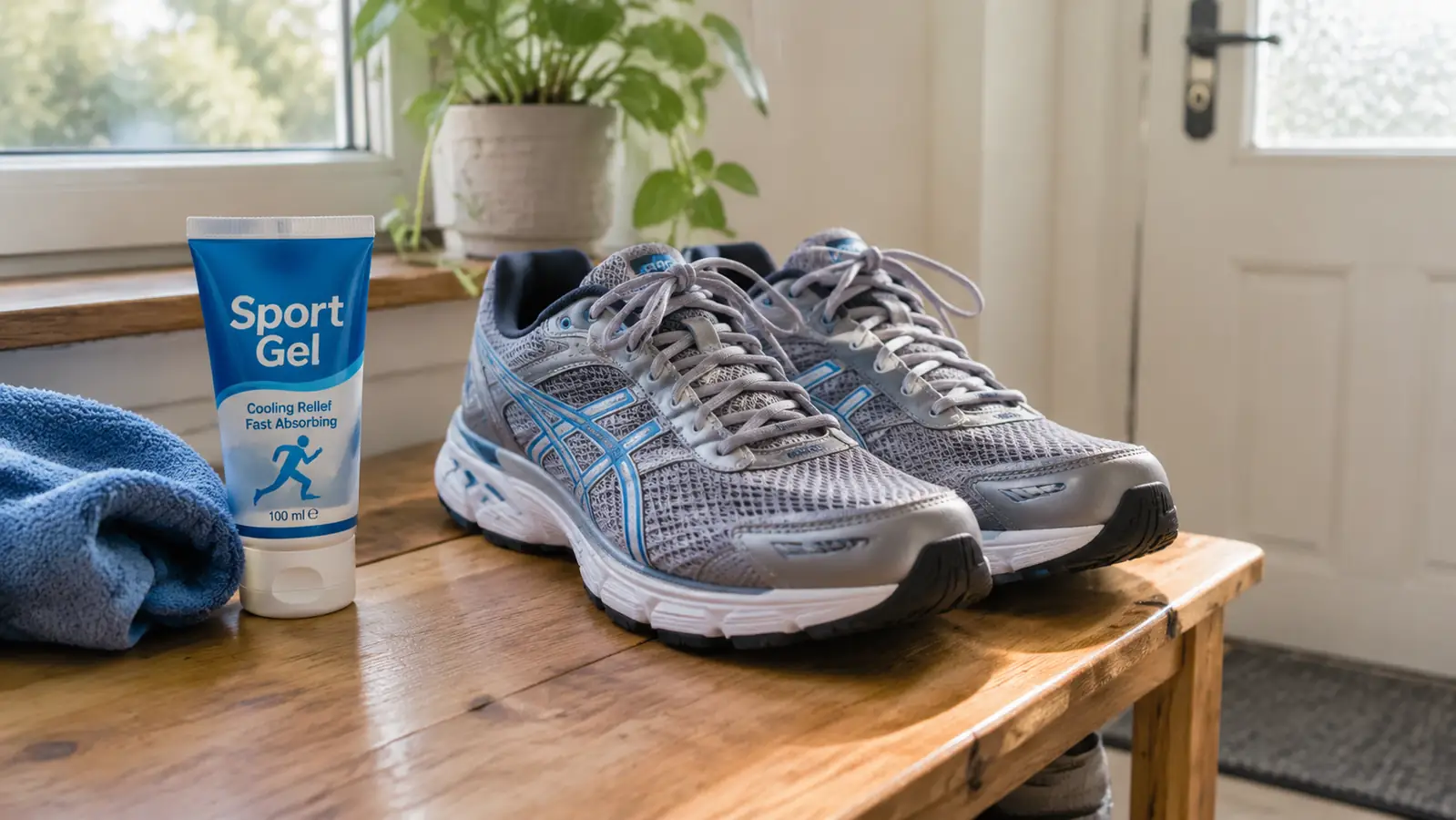
On a normal morning, I put a small amount of Voltaren on the right knee about twenty minutes before I leave. I do not measure it in a fancy way. I use the amount the label shows, and I do not use more because more is not better. I wash my hands right away. Then I put on my walking shoes by the back door, which have the Dr. Scholl's insoles in them, and I head out.
One morning in January I used it before driving to the mall to walk instead of braving the ice, and then forgot to wash my hands before I got in the car. I rubbed my eye. I do not recommend that. Now I wash my hands at the bathroom sink before I do anything else, and I leave a folded towel on the counter for exactly that reason.
If the trail is icy or if I am doing the downhill stretch by the lake, I take the TrailBuddy poles. I set them a little shorter for downhill. The gel does not make me steady on ice. The poles do. That is the kind of thing I wish more reviews would say. A gel is not a balance aid.
After a longer walk, I sometimes use the Vive ice pack wrap for 15 to 20 minutes, with a thin cloth between the pack and my skin. I do not put Voltaren on and then ice right away. I give it time. This is not medical advice. It is just my routine. If your routine is different, follow your doctor or physical therapist.
What the Labels Do Not Tell You
The label on Voltaren tells you the active ingredient, the tube size, and how to use it. It does not tell you how it will fit into your life. It does not tell you that you will need to remember to wash your hands before you touch your eyes. It does not tell you that the first week you will probably use too much and wonder why your skin feels tacky. I did that. I read the label again and used less. That was better.
The other thing no label says is that consistency beats quantity. I missed three days in a row in April because we had company staying with us, and the fourth morning felt like starting over. Not because the gel wears off in some dramatic way, but because everything about my knee is a habit, and the gel is part of the habit. Once it was back in the routine, it was back to being useful.
The arnica label tells you even less. It tells you it is arnica. It does not tell you whether it will help your knee. It does not tell you that it will feel lovely and do almost nothing for stairs. I am not saying arnica is useless. I am saying it is not a knee arthritis gel. It is a nice thing to have in the cabinet for a bruise or a sore shoulder. That is a different job.
Neither label tells you to see a physical therapist. I am telling you that. The eight weeks I spent with mine did more for my walking than any gel. The gel made the walks more comfortable while I did the work. That is the honest version. If you are looking for a gel to replace the work, you are going to be disappointed.
Who Should Buy Which
Buy Voltaren if you have arthritis pain in your knees and you want a topical gel with an NSAID and label language about clinical proof. Buy it if you are already cleared by your doctor to use topical NSAIDs and you want something that absorbs quickly and lasts. Check with your doctor before buying if you are allergic to diclofenac or other NSAIDs, have had stomach bleeding, or have been told to avoid NSAIDs. That is not a suggestion. That is a hard stop.
Buy arnica if you want a gentle herbal rub for general soreness, or if you cannot use NSAIDs and your doctor has okayed arnica. Buy it if you like the ritual of a cooling gel and you are not expecting it to change the mechanics of an arthritic knee. Do not buy arnica expecting it to do what an NSAID does. It will not. And do not buy either one instead of seeing a doctor or a physical therapist. I saw both. The gel is a tool, not a plan.
If your knee is deciding your route, start here
Ask your doctor whether Voltaren Arthritis Pain Gel fits your medications, then give it a fair trial. It is not a cure. It is a way to keep walking.
Amazon Check Current Price on Amazon →