
I bought the Vive Knee Ice Pack Wrap about eleven months ago, and I will start where most reviews will not: for the first two weeks I was fairly sure I had wasted my money. My right knee has mild to moderate osteoarthritis, the left one less so, and both of them complain after stairs, after a long downhill stretch, and after the twenty minutes I spend at the kitchen table with the newspaper. I wanted something I could put on after a walk and then ignore. What arrived was a neoprene wrap with three gel packs and a set of instructions that showed me I had been doing cold therapy badly for years.
Here is what badly means. I used to balance a bag of frozen peas on my knee, which meant sitting perfectly still so it would not slide off, and which meant the cold reached the top of the joint and nothing else. The Vive wrap is a different animal. It goes around the knee, front and back, and closes with a hook and loop closure, so the pack stays pressed where I put it while I read or answer email or drink my coffee. It has not made my knees better. It has made the twenty minutes after a walk more comfortable, and over eleven months that turned out to matter more than I expected.
The Quick Verdict
Holds cold or heat against a knee without making you sit like a statue. One knee at a time, bulky under trousers, and the cold fades right about when the timer says it should.
Amazon Check Today's Price →The twenty minutes after the walk, handled
One wrap, three gel packs, cold or warm, and a closure that keeps the pack where you put it. This is what I reach for on the mornings my right knee has opinions.
Amazon Check Today's Price on Amazon →How I've Used It for Eleven Months
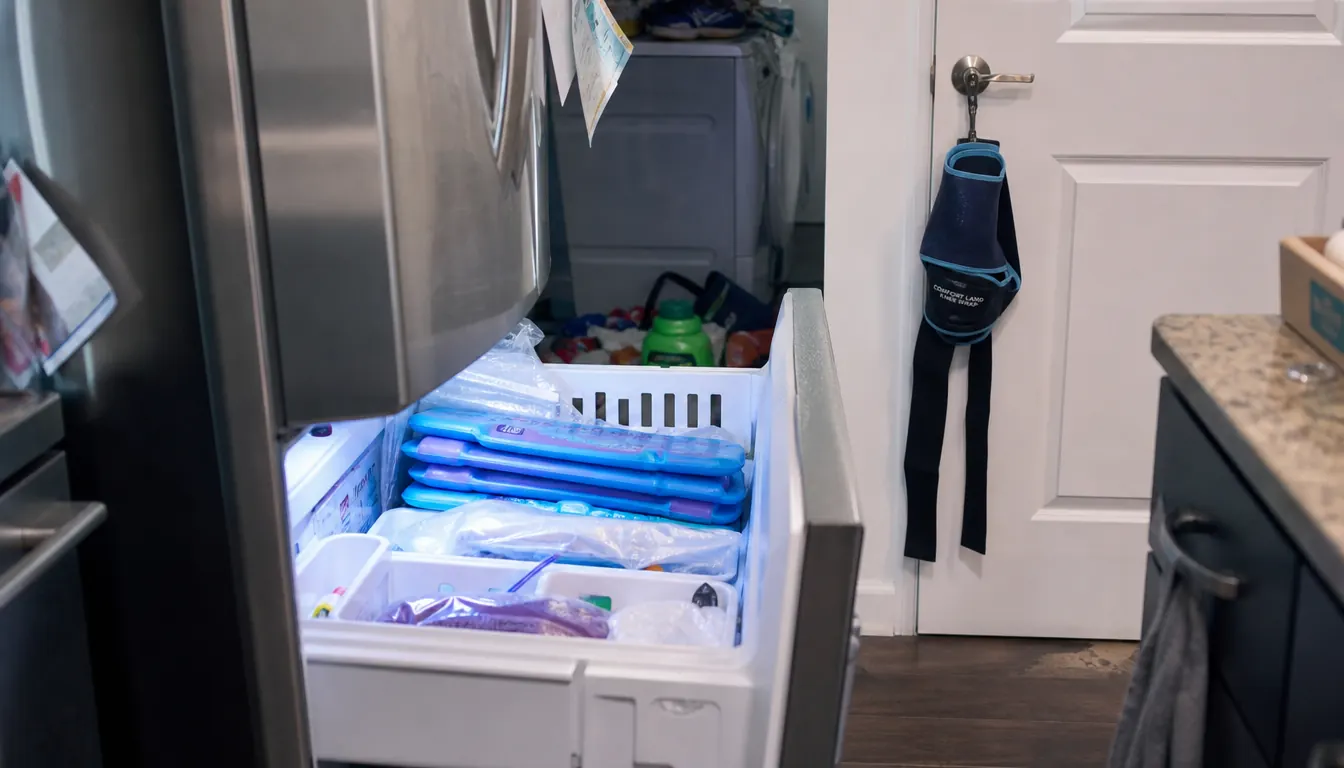
The wrap hangs on a hook in the laundry room and the three gel packs live in the kitchen freezer, which sounds like an odd arrangement until you see the routine. I walk most mornings, two to three miles on the paved trail around the lake near our house on a good day, shorter when my knees are already grumbling. When I get home I kick my shoes off by the back door, pour a glass of water, and if the walk ran long or the stairs got the better of me, I pull a pack out of the freezer, slide it into the wrap, and put the whole thing on my right knee with a thin dish towel between the pack and my skin. Last October there was a Saturday where I walked the lake trail in the morning and then drove to three stores for errands because Gary's birthday was the next day. By the time I got home both knees were talking to me. I put the wrap on the right knee, propped my heel on the second stair, and read for twenty minutes. That afternoon I got up out of the chair without pushing off the armrests, which is my own private test for whether a thing is working.
Fifteen to twenty minutes, cloth in between, and then it comes off. That is what my physical therapist suggested and what the Vive instructions say, and it is what I stick to. Not out of discipline. At about eighteen minutes the cold stops feeling good and starts feeling like something I want off my leg. I use the timer on the stove so I do not talk myself into five more minutes, because I have done that, and the extra five did nothing except make my skin unhappy.
When the knee is stiff in the morning rather than sore, I warm a pack instead. Warm water in the sink for a few minutes while the coffee brews, then into the wrap, then onto the knee while I read the paper. Ten minutes of that before I head out the door and the first hundred yards of the walk stop being a negotiation with myself. In January, on the mornings I use the treadmill in the basement instead of the trail, that warm pack is the difference between walking and skipping it.
What the Wrap Actually Does Well
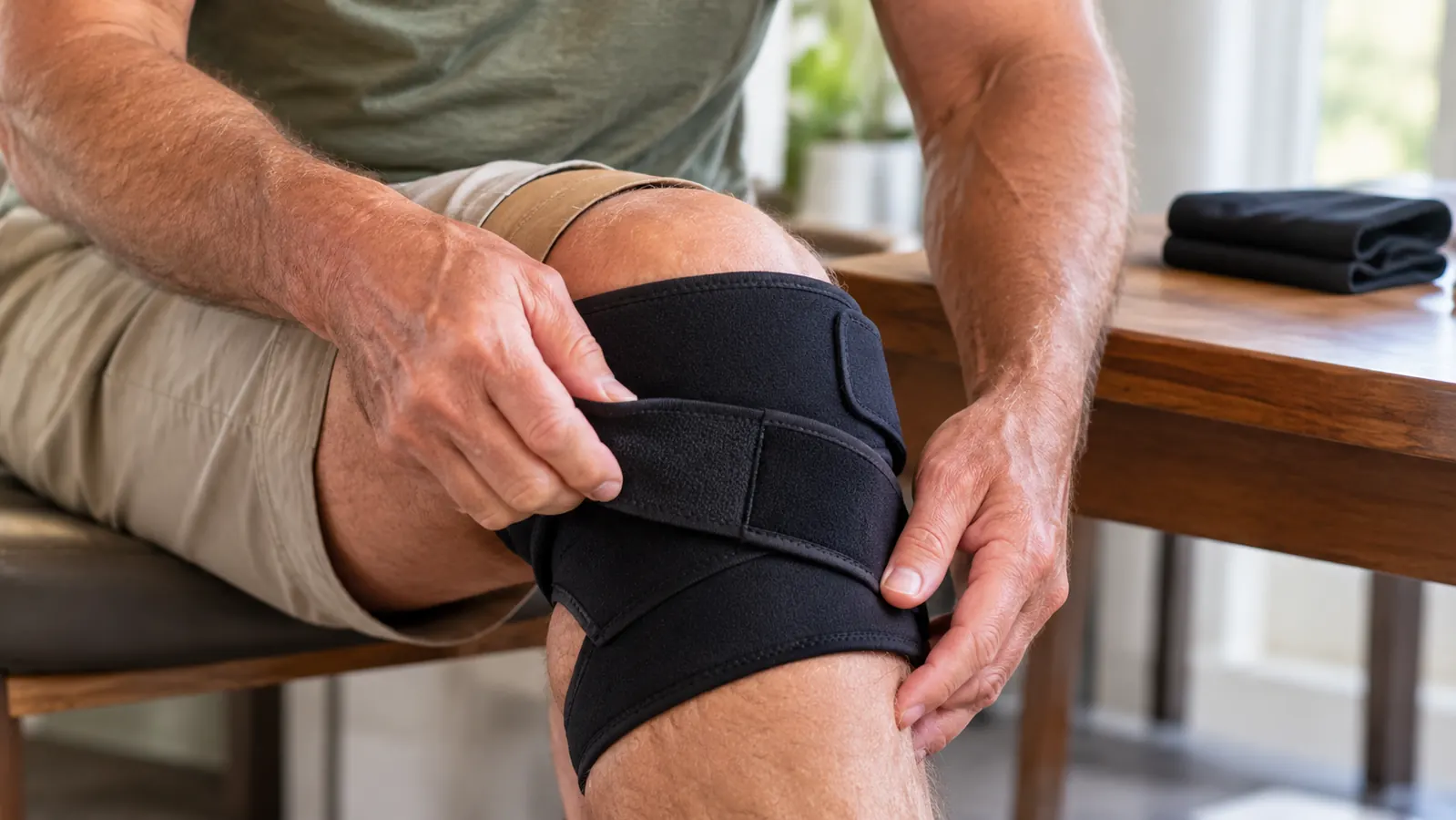
The one thing it does that a bag of frozen vegetables cannot is stay where you put it. That sounds like a small thing. It is not a small thing. The reason I quit cold therapy the first three times I tried it was that it required me to sit perfectly still, and sitting perfectly still is not a skill I have. With the wrap on, I can read, take a phone call, fold laundry with one leg out in front of me, or just stare out the window. The closure and the wrap shape are what remove me from the equation. Before this, I tried holding a gel pack against the knee with an elastic bandage. It worked for about four minutes. The bandage rolled, the pack slid toward the back of the joint, and by the time I had it right again I had lost my patience and most of the cold. The wrap replaced the bandage and the balancing act with one piece, and it did it well enough that I stopped thinking about it, which is the highest compliment I can pay a piece of equipment I use most days.
It also covers more than the top of the knee. The wrap is built for the front and the back, and on a day when my knee is puffy at the sides after a long morning of errands, I can shift the pack before I close it and get the cold where the swelling actually is. The compression is light and adjustable, not rigid. I already own a compression sleeve for walking and I do not want to sit on the couch in it. I want something that holds a cold pack against a joint and then comes off.
The closure is hook and loop, and the wrap is listed as fitting knees up to twenty-one inches around. Mine measures about seventeen on the right when it is not swollen and I have plenty of room left over, so I am not fighting the end of the adjustment. It also does not slide down my leg while I sit, which was my main worry after reading complaints on cheaper wraps that sag the moment you stand up to answer the door.
What Nobody Tells You About the Cold
The cold does not last as long as you picture it lasting. A frozen gel pack inside a neoprene wrap is insulated on both faces, which is precisely what you want, and it still stops delivering real cold at roughly the fifteen to twenty minute mark. That is fine, because that is how long you are supposed to ice anyway. But if you were imagining forty minutes on the couch with your leg propped up, you will be disappointed, and you should not be doing forty minutes regardless.
Two small annoyances worth knowing about. A frozen pack is stiff at first and does not mold to the shape of the knee for a minute or two, so I flex it slightly before it goes into the wrap. And the pack sweats. After twenty minutes both the pack and the inside of the wrap are damp, so I wipe them down and let the wrap air dry on its hook rather than folding it into a drawer while it is still wet. I keep a small towel folded over the arm of the chair for exactly this reason now, and I wipe the inside of the wrap before it goes back on the hook. In summer, when the house is warm, the damp sits in the neoprene longer, so I hang the wrap over the laundry room door instead of flat against the wall. Small habits, but they are the difference between a wrap that still smells neutral eleven months in and one that does not.
The last thing nobody mentions is that one wrap means one knee. Mine are both affected, the right much worse, so I treat the right, because the right knee is the one that decides whether I walk tomorrow. The left one gets a compression sleeve on walk days and that has been enough so far. If it stops being enough, I will buy a second Vive wrap rather than try to do both knees with one.
The cold fades at about the eighteen minute mark whether I am ready or not, which is the wrap telling me to stop before my knee has to.
Fit Notes, Especially If Your Knee Is Bigger Than You Think
Measure before you assume. Sit down, bend the knee slightly, and run a soft tape around the middle of it. Compare that number to the twenty-one inch limit. I do not own a soft tape measure, so I ran a piece of kitchen string around the middle of the knee, marked the spot with a pen while it was still on my leg, and laid the string against a ruler on the counter. That took four minutes and settled a question I had been vaguely worried about for a week. Mine is nowhere near the limit, but a friend of mine who is a good deal taller than I am worried hers would be close, and she would have discovered that in about thirty seconds with a tape measure instead of after ordering. Whatever number you get, leave a little room for swelling, because the knee you measure at nine in the morning is not always the knee you have at four in the afternoon.
Where you set the pack matters more than how hard you pull the closure. My aching spot is just below and to the inside of the kneecap, so that is where the pack goes, which means the wrap sits slightly off center on my leg. For the first week I had it centered like the photos and the cold was mostly landing on the part that was not bothering me.
Two fit complaints, both minor. The wrap is bulky, so it is not going under a pair of jeans while you walk around the house, and I would not try. And if you set it too high, the edge can bunch behind the knee when you bend, which is uncomfortable rather than painful. Settle it, sit down, bend once, and adjust before you commit to twenty minutes.
The Warm Side Is the Part I Use Most in Winter
Everyone buys this for the cold, and I did too. Eleven months in, the warm gel pack is what I use on the mornings when the forecast is single digits and my knees have stiffened overnight. Warm water in the sink, a few minutes in the pack, then ten minutes in the wrap while the coffee finishes. The wrap holds it against the joint just as well as it holds the cold pack, which is the whole reason a two-way design was worth it to me.
I also use a warm pack in the evening now and then, on the couch, after a day that involved more stairs than usual. My own rule, and it is only my rule, is cold for after activity and anything that looks puffy, warm for stiffness before I get moving. Your doctor or physical therapist will have a better opinion than mine does, and it is worth asking, because heat and cold do different jobs and I got that backwards for a while.
The Upkeep, and the Two Habits That Save It
The wrap is machine washable, which I did not expect. The catch is that the gel packs come out first, obviously, and the closure should be fastened before it goes in the drum so the hook side does not grab everything else in the load. I learned that one from a load of towels. It air dries overnight on the hook in the laundry room and it has not lost its shape in eleven months of fairly regular washing.
The gel packs themselves just need a wipe. Mine have been in and out of the freezer hundreds of times and they are still intact, no leaks, no thinning. If one ever does split, the wrap carries a sixty day guarantee from Vive, which will not help me now but is worth knowing if you are on the fence and want a backstop while you figure out whether the routine suits you.
What I Liked
- The wrap stays where you put it, so you can read or work instead of sitting still
- Covers front and back of the knee, not just the top
- Fits knees up to twenty-one inches, with room to adjust the closure
- Works both cold and warm, which doubles its usefulness in winter
- Machine washable and it has held up to eleven months of regular use
Where It Falls Short
- One wrap means one knee at a time, so two bad knees means two purchases
- Bulky enough that you cannot wear it under normal trousers
- Cold fades around the fifteen to twenty minute mark, as it should
- The gel pack sweats, so the wrap needs air drying rather than folding away
- Frozen packs are stiff for the first minute or two before they mold to the joint
Who This Is For
This is for the person who has been told to ice the knee and has quietly stopped doing it, because the bag of peas slides off or the whole business is uncomfortable and tedious. It is for anyone whose knees ache after a walk, a flight of stairs or a day on their feet, and who wants the after-care part to take fifteen minutes of sitting down rather than fifteen minutes of holding a bag in place. If you have a freezer with a sliver of spare room and a hook to hang the wrap on, it slots into a routine quickly.
It is also for the winter walker, and I did not think I would be saying that. I bought it in spring and assumed it was a cold-therapy purchase. The warm pack earned its keep by the following January, when stiff mornings were the bigger problem and cold was not what I needed at seven in the morning.
Who Should Skip It
If you want something you can wear while walking, this is not it. Wear a compression sleeve for the walk and use this for the recovery afterwards. If you need cold on both knees at the same time, budget for two wraps or accept that you will be rotating one, which is what I do. And if you have circulation problems or nerve damage or any condition that changes how your skin handles cold, talk to your doctor before you use a cold pack at all, because that is well past what a wrap review can answer.
Finally, if you are looking for something that fixes the knee, this does not do that and neither does anything else on my shelf. What it does is make the fifteen to twenty minutes after a walk comfortable enough that I actually do it, consistently, eleven months running. That is a smaller promise than the listing photos make, and it is the honest one.
If your knees are the reason your walk keeps getting shorter
This is the piece of the routine I have kept up longest. Cold after the walk, warm before it on the stiff mornings, and a closure that means I can read the paper while it works.
Amazon Check Today's Price on Amazon →